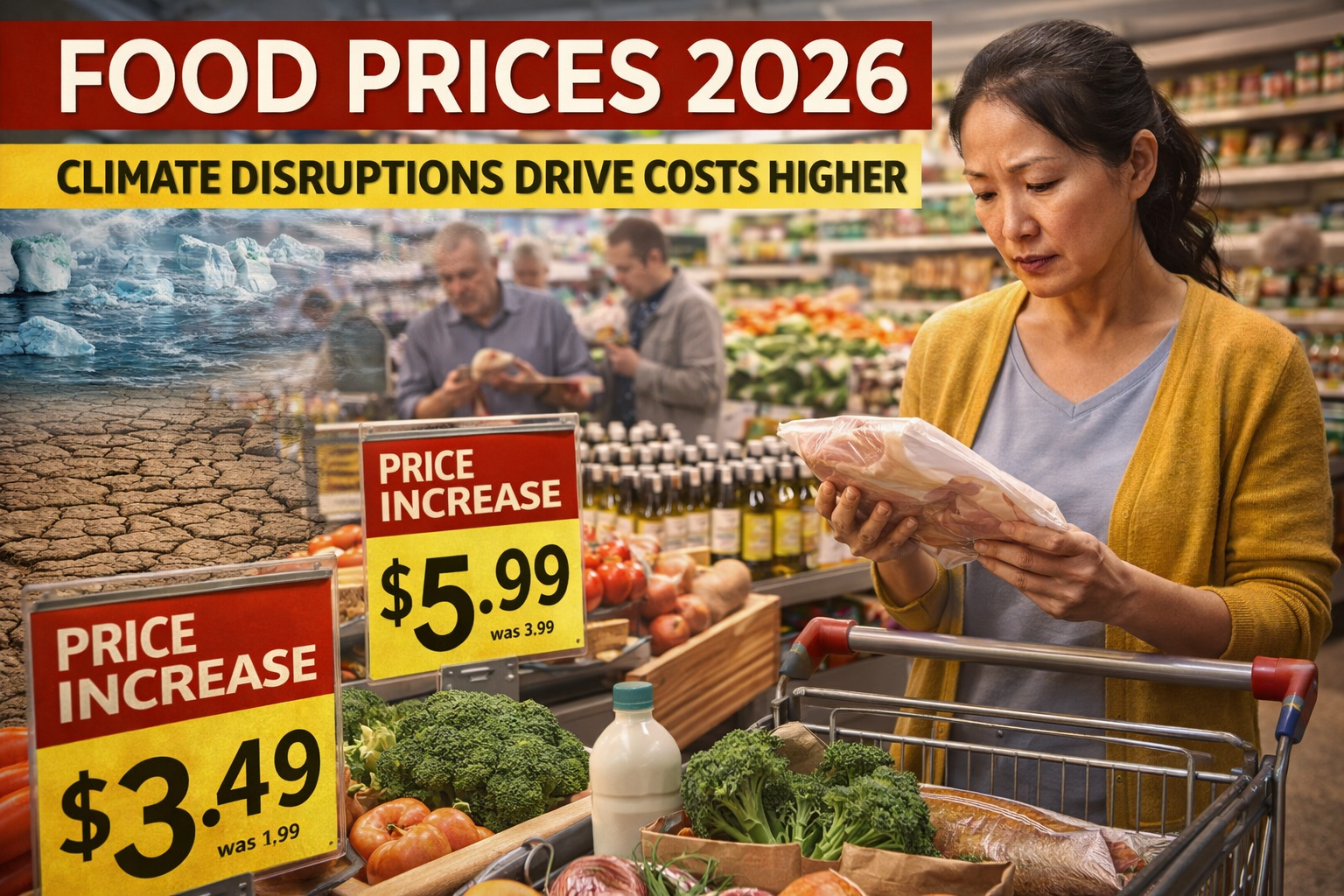
🌍 Global Food Prices Rise in 2026 as Climate Shocks Hit Supply Chains
January 2026
Food prices 2026 are rising sharply across the world as climate disruptions affect global supply chains. As a result, households are paying more for basic groceries, while governments face growing pressure to respond.
Why Food Prices 2026 Are Rising Worldwide
Climate shocks are hitting food production harder than expected. Droughts have reduced grain harvests in key regions. Meanwhile, floods destroyed vegetables and fruit crops elsewhere.
Because of these disruptions, global food prices have increased steadily. Staple foods such as wheat, rice, and cooking oil now cost more in many countries.
According to international food agencies, climate risks are becoming more frequent. Therefore, price stability remains uncertain.
👉 Outbound link example:
https://www.fao.org/home/en
Climate Disruptions Driving Food Prices 2026 Higher
In addition to climate damage, transportation costs are rising. Fuel prices remain elevated in many regions. Consequently, moving food from farms to markets is more expensive.
Shipping delays also affect food availability. As a result, global food prices continue to climb, especially in import-dependent countries.
👉 Outbound link example:
https://www.worldbank.org/en/topic/agriculture
🧑👩👧 Families Feel the Pressure of Global Food Prices
Higher global food prices hit low-income families first. Households now spend a larger share of income on food. Therefore, less money is available for healthcare and education.
In many cities, consumers are changing habits. People buy smaller quantities or cheaper alternatives. Some families reduce meals entirely.
👉 Internal link example:
Read more: Rising Inflation Pressures Households in 2026
(your-site.com/inflation-2026)
How Food Prices 2026 Affect Families and Markets
Governments are responding with subsidies and tax cuts. Some countries have reduced import duties to ease food costs. However, economists warn these measures are temporary.
Long-term solutions require climate-resilient farming and better storage systems. Without reform, global food prices may remain unstable.
👉 Internal link example:
Related: Climate Change and Economic Risks in 2026
(your-site.com/climate-risks-2026)
🔮 Will Global Food Prices Keep Rising?
Most analysts expect global food prices to remain volatile through 2026. Climate uncertainty and energy costs continue to pose risks.
However, investments in agriculture technology could help stabilize supply. Ultimately, food security is becoming one of the world’s biggest challenges.