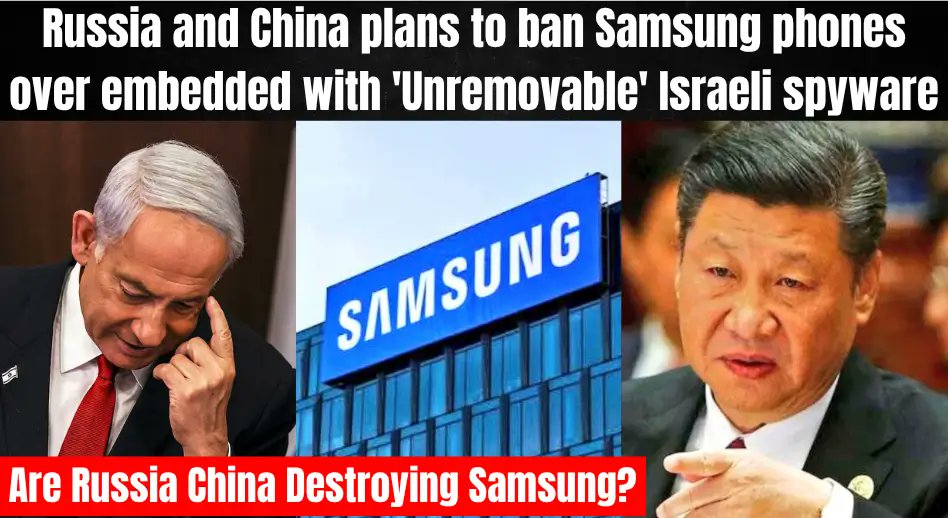
Recent allegations claim that some Samsung phones come preinstalled with Israeli-linked spyware. This has set off alarms in digital security circles. It has also raised questions about geopolitical implications. Consequently, one question keeps appearing: could countries like China or Russia take action against Samsung over these allegations? Let’s examine the issue.
The Allegation in Brief
Reports from the digital rights group SMEX claim that some Samsung devices in the Middle East and North Africa (MENA) region include an app called AppCloud. This app is developed by the Israeli company ironSource.
-
The app reportedly collects sensitive user data, such as device fingerprints, IP addresses, and possibly biometric information.
-
A secondary app, Aura, can install additional software without explicit user consent.
-
Critics argue that this could create a privacy risk. In theory, it could also be exploited for surveillance purposes.
Samsung has not officially confirmed that this app constitutes spyware. Nor have they acknowledged any connection to government surveillance operations.
Why China and Russia Might Care
Both China and Russia have tight controls over foreign technology. They are also highly sensitive to anything that might threaten national security.
-
China
-
China has previously scrutinized foreign companies, including Apple and Google, over data collection practices.
-
Rumors suggest that China could investigate Samsung. They may want to see if Israeli-linked apps could compromise the Chinese network.
-
In the worst-case scenario, Chinese regulators could restrict Samsung devices from certain networks. However, this is currently speculation.
-
-
Russia
-
Russia has a history of blocking or restricting foreign technology perceived as a security threat.
-
The government may investigate whether Samsung devices could collect data that ends up outside its control. This is especially relevant if Israeli apps are involved.
-
Could They “Destroy” Samsung?
While the headlines may sound dramatic, the reality is more nuanced:
-
Market Restrictions: China and Russia could impose regulatory restrictions. They could require Samsung to remove certain apps or limit sales in critical sectors. This has happened with other tech companies before.
-
Complete Ban?: It is unlikely that either country could fully “destroy” Samsung. The company has size, diversified production, and a strong global market presence. A ban might reduce sales, but Samsung has many markets outside these countries.
-
Reputation Hit: Allegations of spyware could damage Samsung’s trustworthiness. This is especially true in government or corporate sectors in both China and Russia.
Geopolitical Implications
This issue highlights how technology, privacy, and geopolitics intersect. Even a commercial app linked to a controversial country can become a security flashpoint.
If China or Russia take action, it may push Samsung to reassess its supply chain and preinstalled software. Doing so could help the company avoid conflicts in sensitive markets.
Conclusion
The notion that China or Russia could “destroy” Samsung over Israeli spyware is exaggerated. However, market restrictions or investigations are plausible.
Samsung faces increasing scrutiny worldwide for privacy and security practices. This is particularly true in countries wary of foreign influence. Ultimately, the company’s response and transparency will determine whether this escalates into a geopolitical clash or remains a regional security concern.